
Wheel Alignment Service: What It Is and When Your Car Needs One
A wheel alignment service resets the angles your tires point at. Here's how to tell it from balancing and rotation, and when an Etobicoke driver actually needs one.
Key takeaways
- A wheel alignment service resets the angles your wheels sit at, mainly toe and camber, so the tires roll straight instead of scrubbing sideways.
- Alignment is a different job from balancing, which is about how weight is distributed around the wheel, and from rotation, which moves tires to different positions on the car.
- The clues worth having checked: one tread edge worn lower than the rest, a steering wheel sitting off-centre while the car tracks straight, a hard curb hit.
- A pull or a vibration can also come from tire pressures, a damaged tire or a worn front-end part. An alignment won't touch those.
- If a pull or vibration starts suddenly or feels severe, or you can see damage to a tire, stop somewhere safe and arrange to have the car looked at.
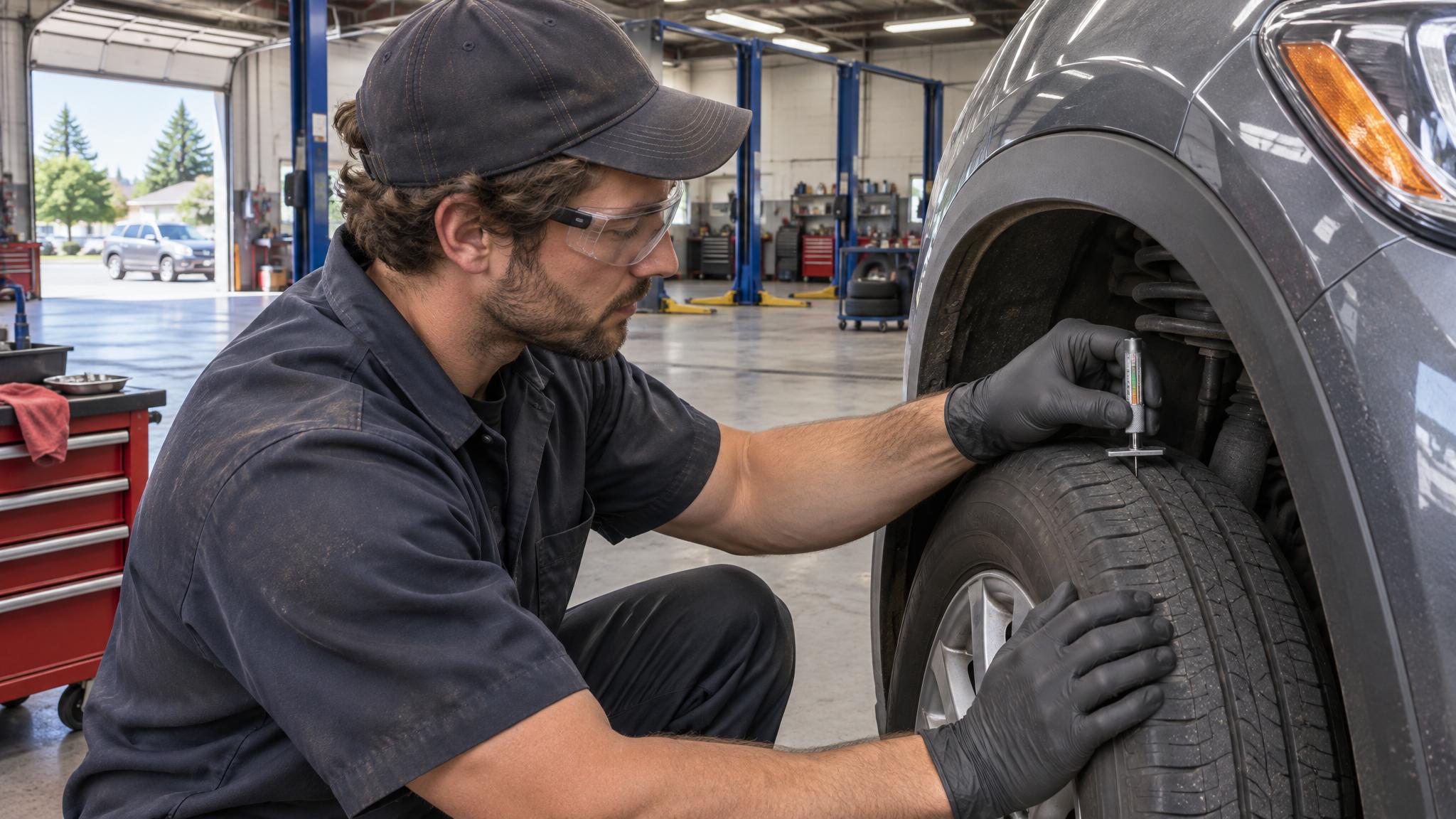
A wheel alignment service resets the angles your wheels sit at so the tires roll straight instead of dragging sideways. Most of the job is toe, which is whether the front wheels point in or out relative to each other. If your steering wheel sits off-centre while the car tracks straight, or one edge of a front tire is worn lower than the rest, those are clues worth having checked. They aren't proof on their own. A pull can just as easily come from tire pressures, a damaged tire or a worn front-end part.
What a wheel alignment actually changes
Three angles do the work: toe, camber and caster.
Toe is the big one. Picture the two front wheels from above. If they point slightly inward at the front, that's toe-in. Slightly outward, toe-out. Toe that's out by a small amount won't feel like much in a parking lot. Out on the road, each tire is dragged sideways a little on every rotation, and the shoulder of the tread pays for it.
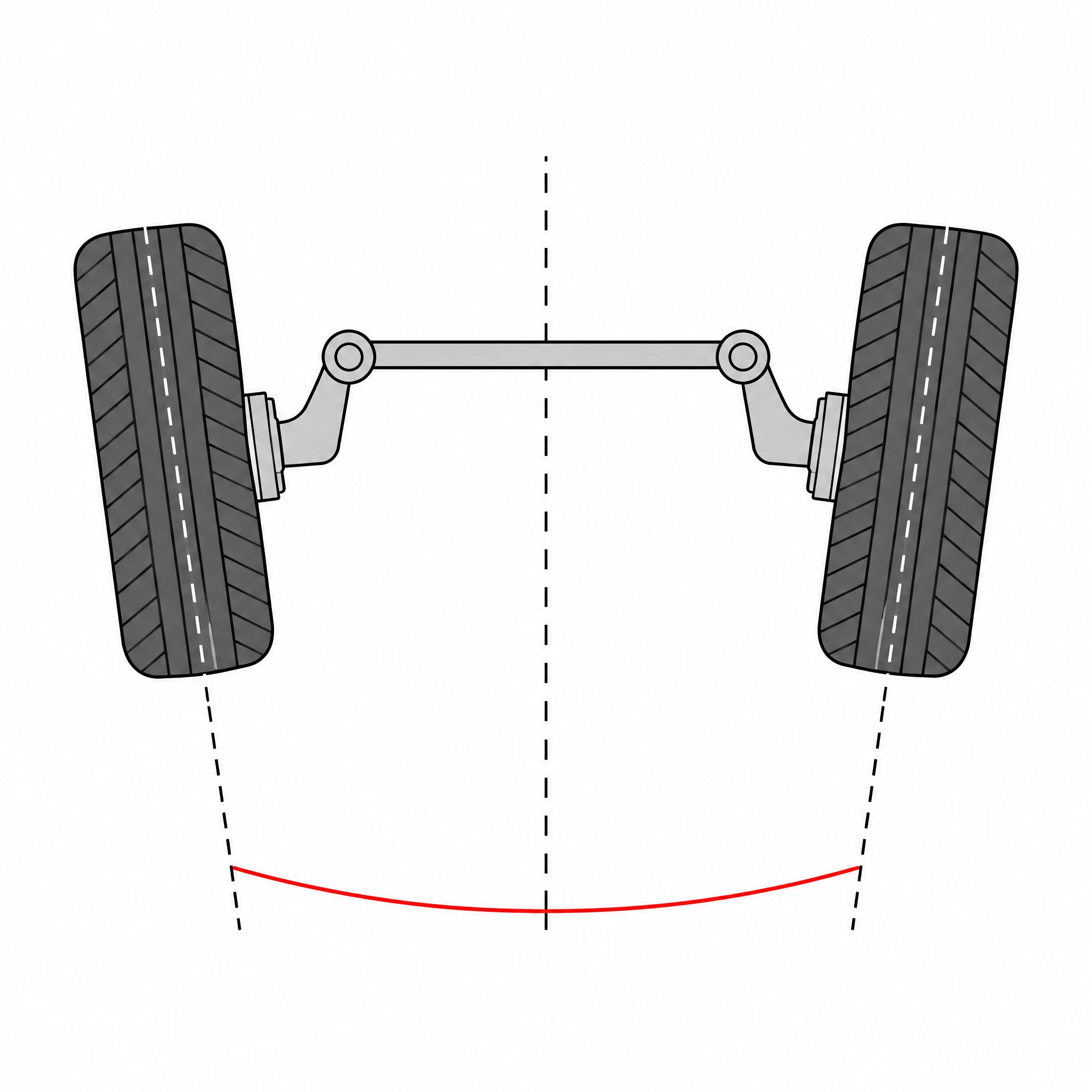
Camber is the tilt of the wheel in at the top, viewed from the front. Too much tilt and the inner edge of the tire wears first. Caster is the lean of the steering pivot, which affects how the car tracks in a straight line and how the wheel returns to centre after a turn.
Alignment, balancing and rotation compared
These three get sold interchangeably and they aren't. Here's the split.
| Job | What it changes | Symptom it answers | How it's done |
|---|---|---|---|
| Wheel alignment | The angles the wheels sit at, mainly toe and camber | Uneven edge wear, off-centre steering wheel, a pull on a flat road | Measured and adjusted with the car sitting on its wheels |
| Tire balancing | How weight is distributed around the wheel, corrected with weights | Vibration through the wheel or seat at highway speed | The wheel spins on a balancer, off the car |
| Tire rotation | Which position on the car each tire sits in | Uneven wear between axles | Wheels moved to different positions |
A road-force balance is a step past a standard balance. It measures how hard the wheel pushes against the roller as it spins, so it can catch a tire that's round enough but stiff in one spot. That kind of tire causes a vibration a plain balance won't chase out.
The confusion usually runs one way or the other. Someone pays for a balance to chase a tire worn down one edge, where nothing is wobbling and a balance can't touch the wear. Someone else pays for an alignment to chase a shimmy, where the angles were never the problem.
Signs your car may need an alignment
None of these are a diagnosis on their own. They're clues you can spot yourself, in a parking lot with a flashlight, before you spend anything.
- Steering wheel sits off-centre while the car tracks straight down a flat road
- Inner or outer tread blocks noticeably lower than the middle blocks on the same tire
- Tread you can feel feathered when you run a hand one direction across it and it catches
- A hard curb strike, a deep pothole, or a winter of frost heave and patched asphalt
- Vague steering, or a wheel that no longer settles back to centre after a turn
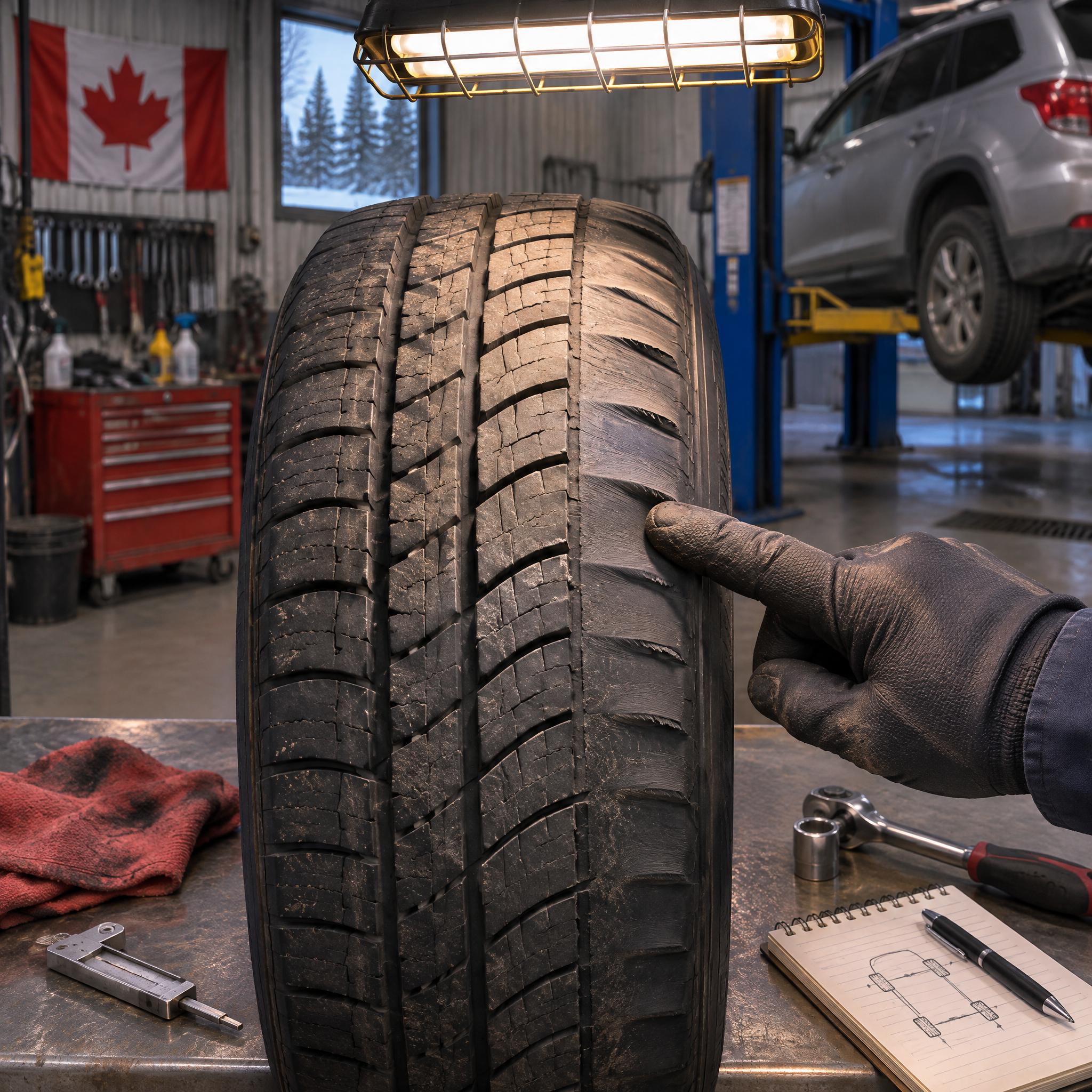
A pull or a shake can also come from a tire that's low or damaged, or from a worn part in the front end. The clue tells you to look, not what the answer is.
One qualifier, because it causes a lot of unnecessary spending: a drift on a crowned road is normal. Most roads shed water to one side, so the car leans with the crown. A pull on a flat, level road is the one worth checking.
Check tire pressures first. A soft tire pulls like a bad alignment, and it's a quick check with a gauge you already have in the trunk. If we top up a corner during an oil change and the pull goes away, that was the whole story.
What an alignment won't fix
Sort the symptom before you book anything.
- A vibration at highway speed. That's the wheel and tire, not the angles: balancing, a bent wheel or tire damage.
- A pull with one tire softer than the others. Air first, then angles.
- A dragging brake. One wheel getting hot and holding the car back will feel like a pull. That's brake work, and it's not something we do here.
- A tire with visible damage. A bulge, a cut, or a tire that's been run flat changes how the car tracks. That tire needs looking at before any angles get measured.
- Worn tie rod ends, ball joints or a bent strut. You can set the angles perfectly and they'll drift out again because the parts holding them have play.
The worn-parts point is the common one. A driver gets an alignment, the car feels right for a while, and the pull comes back because the tired part was never dealt with. If that's what we find, you hear it from us and the repair goes to a shop that does mechanical work. We handle tires, alignments, oil changes and detailing here.
Pair it with new tires or a swap
A fresh set of tires on bad angles wears out fast. The old set is the evidence: how it wore tells you whether the angles need checking before the new tires go on. If the tires coming off wore down one shoulder, or the inner edges were chewed, check the angles before the new set goes on. If they wore flat and even across all four, you likely don't need an alignment just because the tires are new.
Seasonal swaps make this easy to spot. A set of winters that comes off with one shoulder visibly lower than the other tells you something happened over the winter, often a curb or a pothole nobody mentioned.
An alignment is a separate job from a swap, and it's quoted on your car rather than off a menu. Alignment sits on the tire side of what we do, alongside swaps, flat repair and new tires, so it's worth asking about in the same visit. If you're shopping, send the year, make, model and tire size and we'll come back with options — our tire service page has the rest. Rotating on a schedule is the habit that keeps wear even between swaps.
What we check before we adjust anything
The order matters, because measuring angles on a car with a soft tire is a waste of your money.
- Set cold tire pressures on all four, and note any corner that needed a lot of air.
- Measure tread depth at the inner, middle and outer edge of every tire.
- Check for play in the tie rod ends, ball joints and wheel bearings by hand.
- Measure the angles, then adjust what's adjustable on your car.
- Explain what the numbers were and what changed, in plain language.
A car with one tire noticeably different from the other three is worth a conversation before anything gets adjusted. Sometimes the answer is a tire, sometimes it's a pressure habit, sometimes it's the angles.
If a check turns up something we don't handle — a worn front-end part, a damaged tire — you hear it before any adjustment starts. Scope doesn't grow quietly here.
What it costs and how to book
Wheel alignment isn't on our posted price list, so we're not going to pretend a number applies to every car. Ask when you book and we'll tell you what it costs for your vehicle before any work starts. Our pricing page covers the tire, oil change and detailing prices that are posted.
We're at 2082 Kipling Ave Unit #1, a few minutes from the 401, and drivers come here from Etobicoke, Rexdale, west Toronto, north Mississauga and south Woodbridge. Book an alignment check or call (289) 301-8850 and we'll confirm a time.
Alignment questions drivers ask
Does an alignment fix a vibration?
No. A vibration comes from how the wheel and tire are put together: balancing, a bent wheel, a damaged tire, or something worn in the front end. An alignment changes the angles the wheels sit at, and it has no effect on how smoothly a wheel spins. Booking an alignment for a shake can end in a second bill for the job you actually needed.
Can you align a car with worn front-end parts?
You can put it on the machine, but the angles won't hold for long if a tie rod end or ball joint has play. Sort the worn part first, then set the angles.
Get the angles checked
Bring the car in with the tires on it and tell us what you're feeling: a pull, an off-centre wheel, an edge that's wearing fast. We'll check pressures and tread first, because those two answers help decide whether an alignment is even the right job. If it isn't, you'll hear that.
If a pull or a shake came on suddenly, or you can see damage to a tire, don't drive on it. Stop somewhere safe and call us, and we'll sort out getting the car looked at.
Sources
- Finding the Best Dent Fix Near Me - Auto Magicians — automagicians.ca (2026-11-27)
- Satisfaction Guarantee — google.com (2026-11-27)
- Dent removal - Tire Choice Auto Centre — tirechoice.ca (2026-11-27)
Keep the car questions coming.

Car Maintenance Checklist for Etobicoke Drivers
A car maintenance checklist for Etobicoke drivers: what to check on tires, oil and mats between visits, when to book, and what to ask a mechanic.
Read the guide
Used Winter Tires in Etobicoke: What We Check
Used winter tires in Etobicoke can be a smart buy. Here's the tread, age, sidewall and 3PMSF checks we run before a used tire goes on your car.
Read the guide