
Used Winter Tires in Etobicoke: What We Check
The short answer on used winter tires
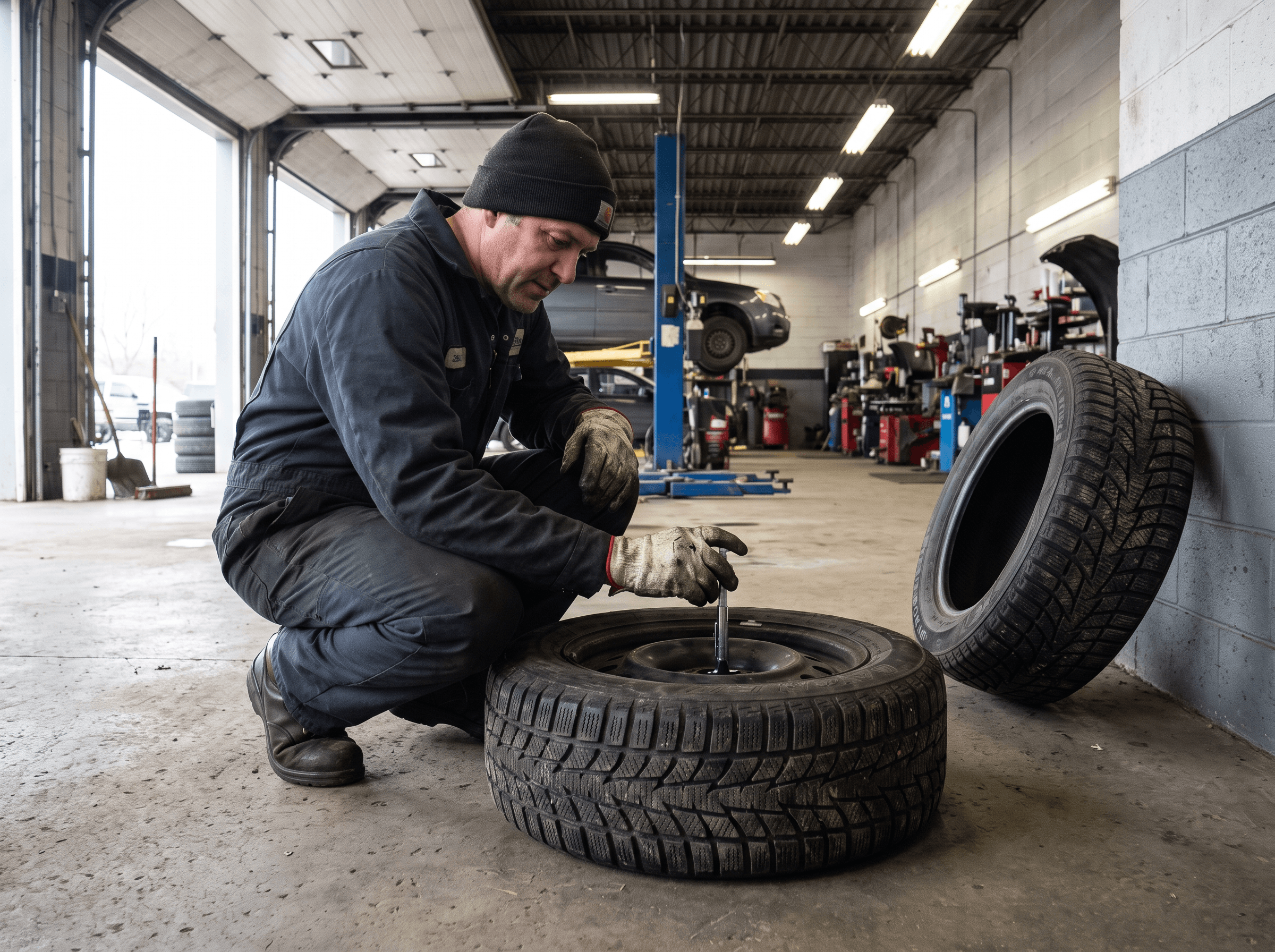
Used winter tires are a legitimate way to get proper snow rubber under a car for the season, as long as somebody has actually inspected them. Four things decide it: tread depth, age, structural condition, and whether the snowflake symbol is still readable on the sidewall. Miss any one of those and the tire is a liability sitting on the front axle of a car that has to stop on Kipling in February.
Most drivers in Rexdale and Etobicoke are choosing between three options right now. A cheap Marketplace set out of somebody's driveway. A brand-new set that costs more than they wanted to spend. Or an inspected used set from a shop. The middle option is often the right one, and the first one comes down to whatever the seller decided not to mention.
The four checks we run on every used tire
Every used tire gets looked at inside and out before it's cleared to sell. Off the rim, or with a light down the bead. Both sides.
- Tread depth, minimum 6/32 of an inch. Measured at three points across the width and at more than one spot around the circumference, because uneven wear hides at a single measurement.
- DOT date under six years old. The four-digit code on the sidewall gives the week and year the tire was built. Rubber hardens with age whether it's been driven on or stored in a garage.
- No sidewall damage, dry rot, or bad patches. Cracking in the sidewall flex area, bulges, curb gouges, or a plug sitting too close to an old repair all end the conversation.
- A readable 3PMSF symbol. More on why this one matters most in a second.
On tread: Ontario's legal minimum is much lower, in the range of 2/32 of an inch (about 1.5 mm), and it's worth confirming for your own vehicle class before you rely on it. We hold used tires to roughly triple that, for a practical reason. A winter tire works by biting into snow and pushing slush out through deep grooves. General winter-tire guidance is that once those grooves get shallow, they can't clear slush fast enough, and the tire starts behaving like a soft all-season. It'll still pass a safety check. It won't stop the way you expect at the bottom of a slushy off-ramp.
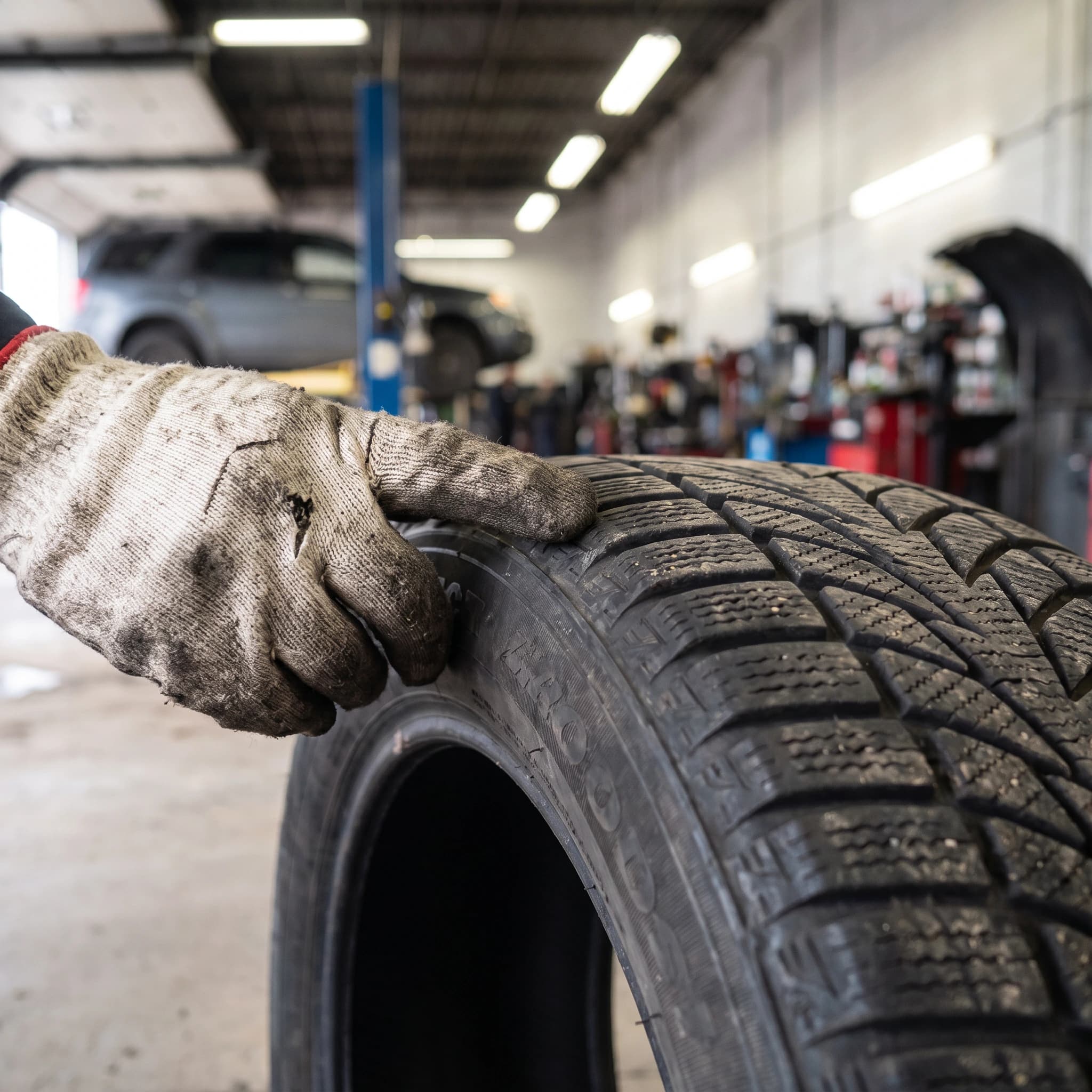
Age is the check people argue with most, and it costs nothing to verify. A six-year-old winter tire with beautiful tread can still have hardened rubber that's lost its cold-weather grip. If the build date is more than six years back, we don't put the tire on a car, no matter how good the tread looks.
Why the snowflake symbol matters most on a used set
The Three-Peak Mountain Snowflake, or 3PMSF, is a small mountain-and-snowflake stamp moulded into the sidewall. It means the tire passed a snow-traction test. Plain M+S (mud and snow) lettering does not mean the same thing and does not qualify as a winter tire for the Ontario insurance discount.
Ontario insurers are required to offer a winter-tire discount, but the amount and the eligibility dates are set by each insurer. Confirm both with yours before you buy anything, and ask what they need to see. Every winter tire we install carries the 3PMSF symbol, and we provide a receipt that identifies the tires so your insurer has something to work with.
Sidewalls scuff. Curbs, salt, brush washes and parking-garage pillars wear the moulded markings down. If you can't clearly read the snowflake on a used tire, you don't have a winter tire for insurance purposes, and you may not have one for driving purposes either. Ask the seller to photograph the symbol on all four sidewalls before you drive across town.
Where a Marketplace set usually fails
Nothing wrong with buying private. Plenty of people sell a clean two-season set because they changed cars. But a driveway gives you no way to see the inside of a tire, and the inside is where the expensive surprises live.
| What we check | Why it matters | Where a private sale usually falls short |
|---|---|---|
| Tread at three points across, multiple spots around | Catches uneven wear from bad alignment or underinflation | Measured once in the deepest groove, if at all |
| DOT date code on every tire | Hardened rubber loses winter grip regardless of tread | Nobody reads it, and mixed sets often hide one much older tire |
| Inner liner and bead area | Reveals old plugs, run-flat damage, and separation you can't see from outside | Tire never comes off the rim, so the inside is never seen |
| Patch and plug history | A repair too close to an earlier one can't be trusted | "It's got a little patch, been fine for years" |
| Sidewall condition and dry rot | Cracks and bulges are not repairable, full stop | Dirt and tire shine cover a lot of cracking |
| Readable 3PMSF symbol | No visible snowflake means no insurance credit | Seller assumes any snow tire counts |
If you've already bought a set and want a second opinion before it goes on, that's a reasonable ask. Bring them by.
What a used-tire install costs and includes
Install pricing is posted and doesn't change based on where the tires came from. Seasonal swap on rims starts at $50 for standard vehicles up to 18 inches, with larger sizes quoted. Off rims starts at $90. Flat repair starts at $30. Pickups, large SUVs and unusual tire sizes can move those numbers, and we confirm any change with you before the work continues. For a fuller breakdown of on-rims versus off-rims, see our winter tire change cost guide.
Used tire pricing itself depends on size, brand and what's actually on the rack that week, so we quote it on the phone rather than post a number that would be wrong by Thursday. Used tires we sell also carry a 30-day workmanship guarantee, on top of the re-torque check that comes with every install.
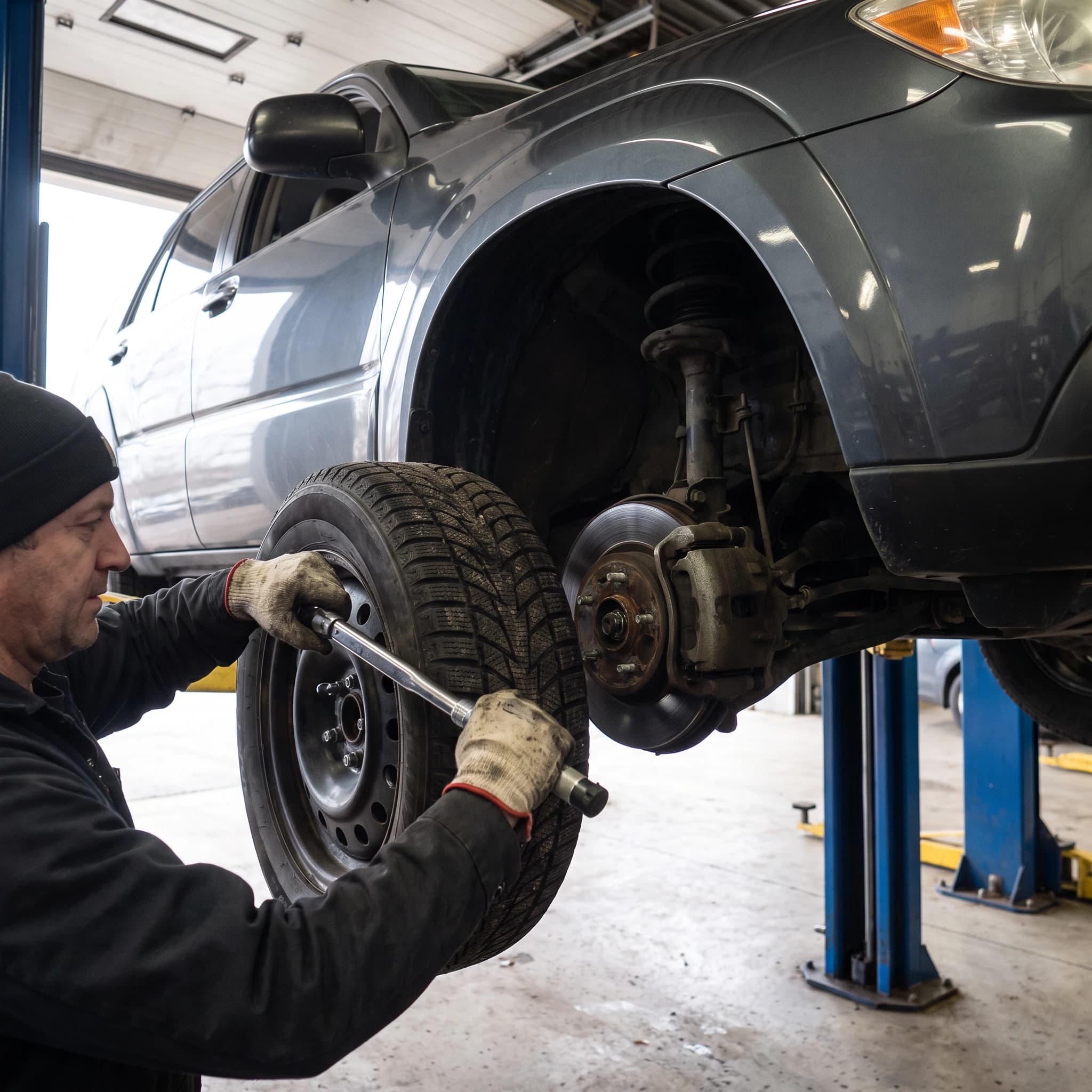
Four tires mounted, road-force balanced and torqued to spec usually takes 45 to 75 minutes. Road-force balancing spins the assembly under load, which catches the kind of imbalance that shows up as a steering-wheel shimmy at 100 km/h and never shows up on a static balancer. Every install includes new valve stems and a free 30-day re-torque check. If a sensor needs TPMS work, sensor replacement, programming or a reset can be done in the same visit, quoted before the work starts. If a vibration or a loose wheel traces back to our install, we correct it.
Why stock is a phone call, not a web page
Used inventory turns over weekly. A size we had four of on Monday can be gone by Saturday, so there's no browsable listing and no way to promise a specific set is waiting. Send your year, make, model, and the tire size printed on the sidewall, something like 225/65R17. Call 416-856-4295 and we'll tell you what's on the rack in that size and what condition it's in.
Bought tires at Costco or online? We'll mount them without any attitude about it. Ship-to-shop is fine too, just give us a heads up so we know what's arriving and whose name is on the box.
When to book your swap in Etobicoke
Swap when daytime temperatures stay under 7°C, which in Etobicoke usually lands in late October. Below that, all-season rubber stiffens and loses grip on cold, dry pavement, before any snow falls. Our full breakdown of the timing question is here: when to put winter tires on in Ontario.
The practical reason to call in October rather than November: by mid-November we're booking about three weeks deep. Late-October callers pick their date. Mid-November callers take what's left, usually after the first messy Tuesday of the season when everyone remembers at once.
While the wheels are off, we can sort out valve stems, TPMS sensors, a wheel alignment and a rotation on the set coming off. Brakes and mechanical repair aren't services here, so if the inspection turns up something in that territory we'll tell you plainly and you'll need a mechanic for it. If you'd rather not keep the off-season set in your garage, we offer seasonal tire storage here on Kipling, and we'll go over what that costs when you call.
Used winter tire questions we get at the counter
Are used winter tires safe?
Yes, when they clear a real inspection: at least 6/32" of tread, a DOT date under six years old, no sidewall damage, dry rot or questionable patches, and a readable 3PMSF snowflake. A used tire that misses any one of those isn't safe at any price, and we'd rather tell you no than mount it.
How much tread should a used winter tire have?
At least 6/32 of an inch, measured across the width in more than one spot. That's the minimum we hold used tires to, not a legal one. Ontario's legal minimum is much lower. Our reasoning: a winter tire earns most of its grip by clearing slush out of deep grooves, and shallow grooves do that job less and less well.
How old is too old for a winter tire?
Six years from the date code, in our shop. The four-digit DOT stamp on the sidewall gives the week and year of manufacture. Rubber compounds harden as they age even in storage, and a hard winter tire behaves like a mediocre all-season no matter how deep the tread looks.
Do used winter tires qualify for the Ontario insurance discount?
Only if the Three-Peak Mountain Snowflake symbol is still clearly visible on the sidewall. Plain M+S lettering doesn't qualify. Insurers set their own discount amount and their own installation date windows, so confirm the details with your insurer, and we'll give you a receipt that identifies the tires we installed.
Can you install used tires I bought myself?
Yes, including sets from Costco or an online seller. We'll inspect them first and tell you straight if one of the four checks fails, then mount, balance and torque whatever passes. Ship-to-shop works if you let us know the order is coming.
How do I find out what you have in my size?
Call 416-856-4295 with your year, make, model and the size off the sidewall (like 215/60R16). Used stock changes weekly, so we'll check the rack and tell you what's actually there rather than guess from a list.
Get your size checked before the rush
Send the car details and we'll tell you what's on the rack. Year, make, model, tire size. Call 416-856-4295. If we don't have your size in used, we'll say so rather than talk you into something borderline. We'll point you at a new set instead. Nokian is the winter tire most drivers here recognise, and it's what we'd put on our own cars.
We're at 2082 Kipling Ave Unit #1 in Etobicoke, four bays, same owner since 2011. We're on Kipling between Rexdale Boulevard and Albion Road, about five minutes from the 401 via exit 359 (Highway 27), with parking out front. Rickey answers the phone.
Already know what you need? Book a swap and we'll hold a bay.