
Car Maintenance Checklist for Etobicoke Drivers
A car maintenance checklist for Etobicoke drivers: what to check on tires, oil and mats between visits, when to book, and what to ask a mechanic.
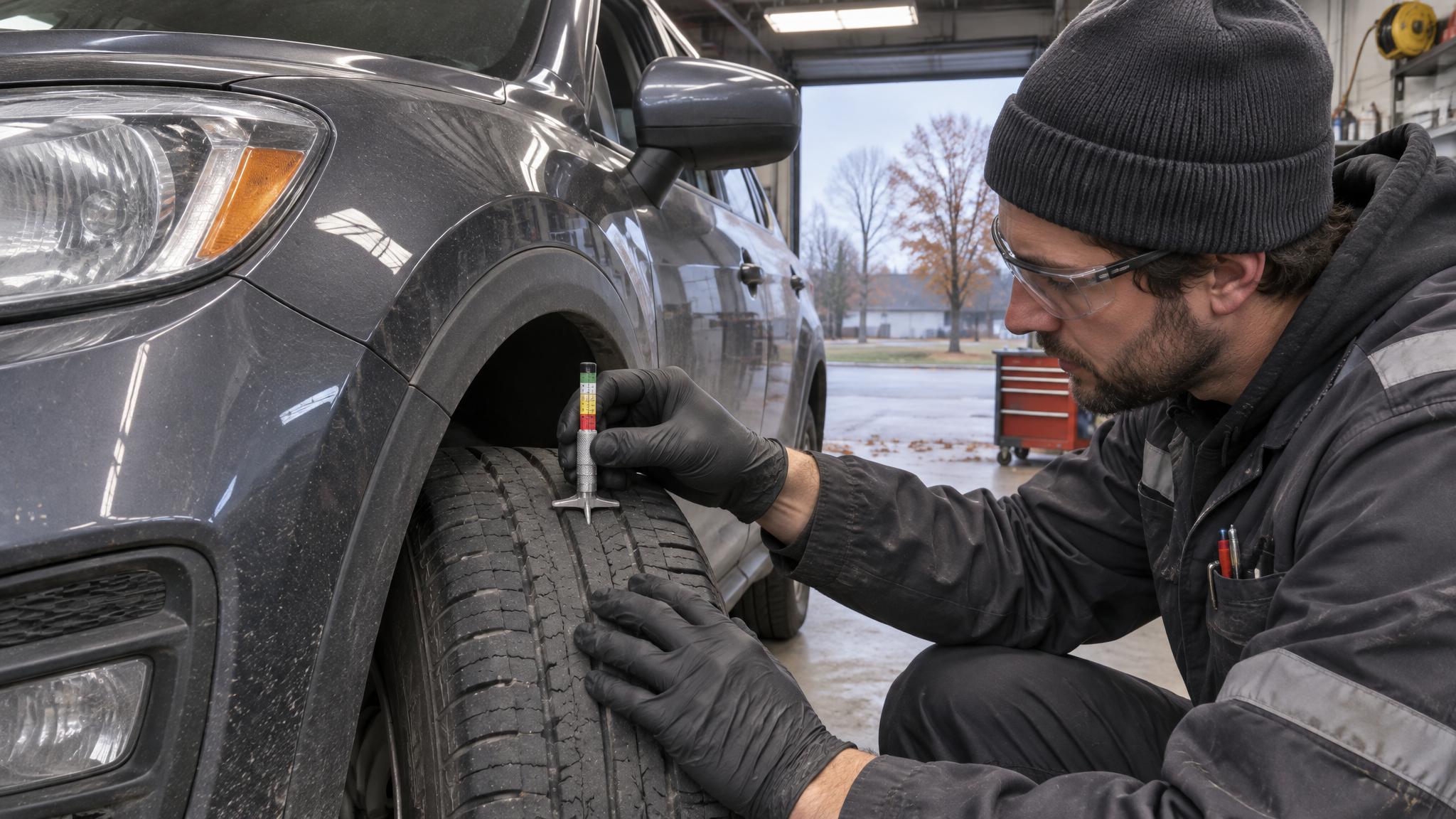
Key takeaways
- Measure tread in 32nds of an inch at three points across each tire, and book the winter swap before daytime temperatures stay below 7°C.
- Check pressures cold against the placard inside the driver's door jamb, once a month and again after a temperature swing.
- Your oil interval comes from the owner's manual and the oil-life monitor, with oil that meets the manufacturer's spec.
- Pull the mats, fit vehicle-specific mats on the retention hooks, and vacuum the salt out before it works into the pile.
- Tires, oil and detailing get booked with the shop. Other winter prep belongs with a mechanic.
Your pre-winter checklist at a glance
A driver in Rexdale who measures 5/32 inch on the front pair in late October has one decision left before the first hard freeze, and it isn't a wash. That number is close enough to the end of a tire's useful life that the winter swap and the replacement conversation belong in the same visit.
Here's the list, split by who does the work.
In your driveway this weekend
- Tread depth at three points across each tire, in 32nds of an inch.
- Tire pressures, checked cold and set to the placard inside the driver's door jamb, then checked again when the temperature swings.
- The oil interval from your owner's manual and the oil-life monitor.
- Floor mats pulled, checked for fit, carpet vacuumed.
In a bay
- Seasonal tire swap, balanced and torqued.
- Oil and filter change in the grade your manufacturer specifies.
- A detail, if the salt and the carpets have gone past what a vacuum will fix.
The first four take a gauge, a pressure reader and ten minutes. The rest need a bay. Below is the reason behind each one, the thresholds that decide it, and where the work belongs.
Tires: tread, pressure and the 7°C line
Tread depth gets measured in 32nds of an inch because that's the unit on the gauge you'll pick up at any parts counter. Read it at three points across the tread: inner shoulder, centre, outer shoulder. Wear that shows on one edge only is a different problem from wear down the middle, and it changes what you do next.
Pressures come off the placard inside the driver's door jamb, not the number moulded into the sidewall. Check them cold, before a drive, once a month. Cold weather pulls pressure down, so check again after the first real cold snap rather than waiting for the calendar. Transport Canada's guidance on winter tire pressure makes the same point.
A tire that keeps losing pressure needs to be inspected, not topped up and forgotten. A tire that's visibly flat or damaged shouldn't be driven on. Put the spare on, or have the car brought in.
Winter rubber earns its place once daytime temperatures stay below 7°C. All-season compound stiffens as it cools, so the grip you had in September isn't there in November. In Toronto that line usually lands in late October. Transport Canada's winter driving preparation checklist is a decent second set of eyes on the rest of the car.
We handle the tire side of that list: new and used tires, seasonal swaps on and off rims, flat repair, rotation, TPMS service, wheel alignment and off-season storage. The tires page spells out what each job covers.
If your car pulls or wanders, that gets checked here, and a wheel alignment sits on our service list. A pull can come from a worn suspension part as easily as from the alignment itself, so when the wear pattern points at a part, that's mechanical repair and not something we take on. We'll tell you what we found and which trade should look at it next.
Oil: your owner's manual beats the sticker
Two things decide the oil interval: your owner's manual and the oil-life monitor in the dash. Go with those. The manual names the grade and the spec the oil has to meet, and the cap or the manual is where you read it. Not whatever's on sale that week.
As a rough guide and nothing more, conventional oil is usually framed around 5,000 km and synthetic around 10,000 to 12,000 km. If your manual or the monitor says something different, they win.
Your driving shifts the read too. A car doing short hops around Kipling Heights all winter rarely gets fully warm, so moisture builds in the crankcase in a way the same car commuting to Mississauga on the 401 never sees. Short trips and cold starts are the harder life, not the longer ones.
What an oil change here includes:
- A new filter to the manufacturer's spec.
- Oil that meets the spec listed in your owner's manual.
- A multi-point fluid and belt check.
- Tire pressures set while the car is on the ground.
- Old oil disposed of properly.
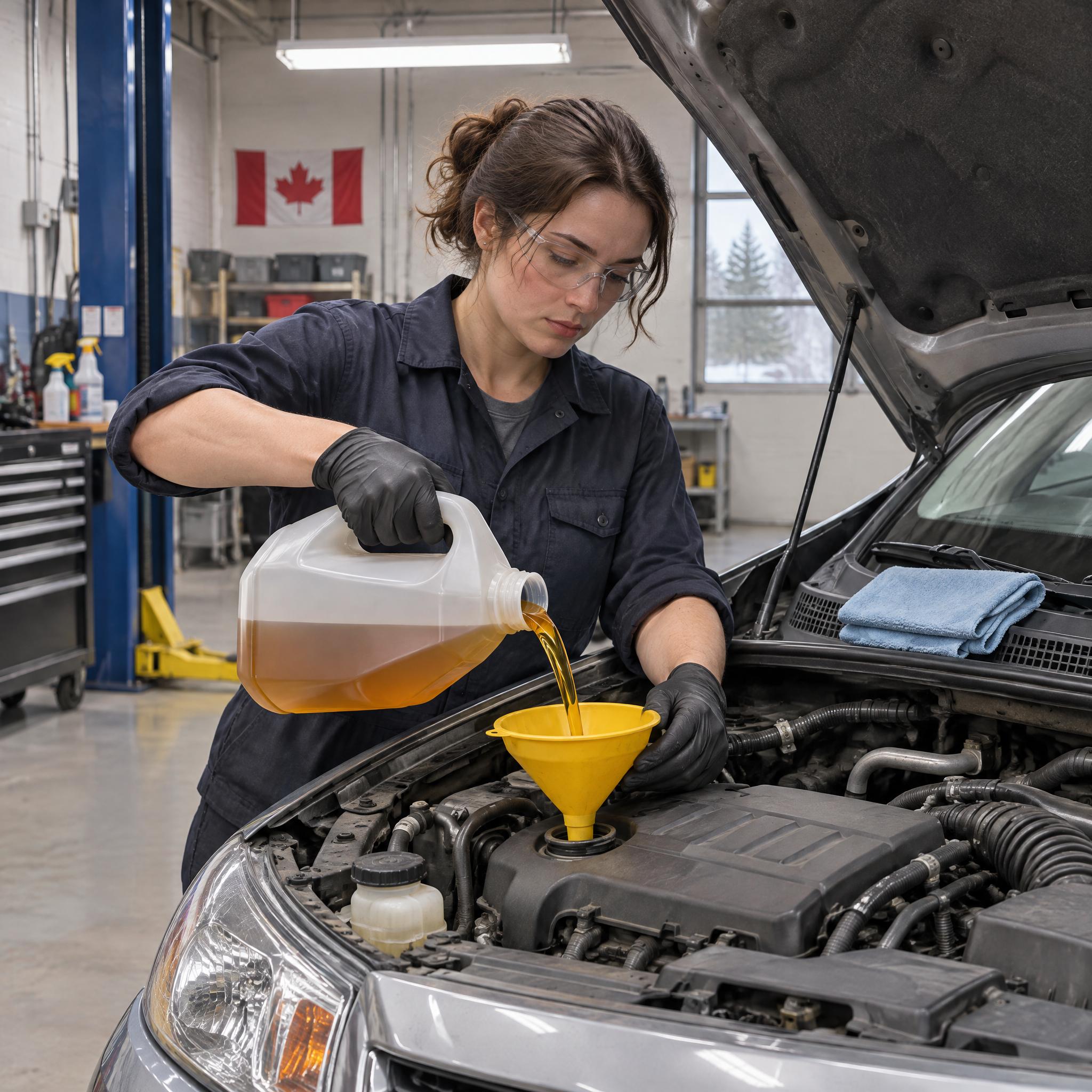
The 4-litre cap is where the number can move. A pickup or a large SUV that takes more gets confirmed with you before the work continues, and the same applies to anything the multi-point check turns up.
To pick a day, use the booking page or call the shop.
Carpets, mats and the detailing that gets the salt out
A driver's mat that creeps forward toward the pedals is a winter problem, and it takes a few minutes to fix. Pull it out, fit a mat made for your vehicle, hook it onto the retention posts, one mat per footwell. Then check that nothing sits under the pedals or fouls them when a pedal goes to the floor. Never drive with a mat that interferes. Vacuum the carpet underneath while the mat is out.
Salt sits in the pile all winter if it never comes out. It also works its way into the sound deadening and stays there, which is why a spring carpet that smells like a hockey bag usually started as a November oversight.
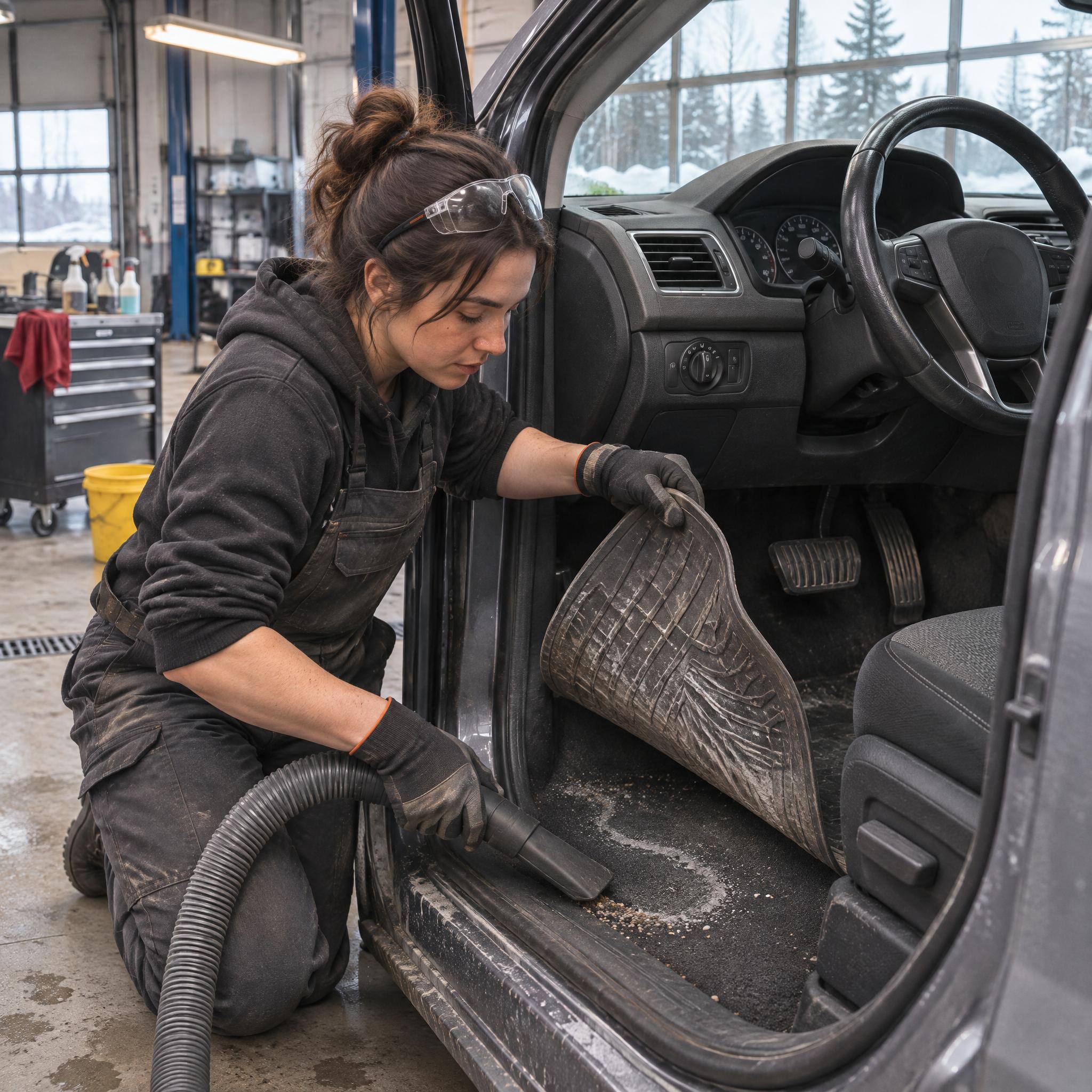
A self car wash bay can rinse a mat and knock the worst of the crust loose. It won't pull salt out of the pile. That's the gap between a wash and a detail: carpet needs water lifted out of it, not just sprayed.
The detailing we do means hot-water extraction, steam at the vents and seams, foam and hand washing, done in a bay rather than in your driveway. The options:
- Express detail: exterior hand wash, mats, vacuum and an interior wipe-down.
- Full detail: exterior and interior detail plus the engine bay, door jambs and trunk.
Be clear about what a detail won't do. It can improve light surface marks. It doesn't fix a scratch through the clear coat, and we don't do paint correction or ceramic coating. A car in unusually heavy condition gets quoted before we start rather than after.
Where a car wash fits in the list
Three options, but only one of them happens here.
A touchless car wash strips road salt off the body without anything touching the paint, which matters if you're trying to avoid swirl marks. Swirls come from contact: brushes, dirty mitts, a dry towel on a gritty panel. Self-serve is the cheapest route and lets you control what touches the car, though you're the one holding the wand. Both of those are drives elsewhere in the city.
At our shop, a hand wash comes inside the detail packages. There's no standalone wash on the menu. The smallest version is the express detail: an exterior hand wash plus the mats, a vacuum and an interior wipe-down. Book that one if you want the salt off the paint and out of the footwells in a single stop.
The road-salt film on your lower doors and wheel arches comes off with any of the three. No wash measures your tread, checks your oil life, or gets the salt out of the carpet. If the carpets are the problem, you want the detail.
What goes to a mechanic, and what stays here
Our work is tires, oil changes and detailing. Some jobs don't belong here, and we'd rather tell you that on the phone than after you've driven across the city.
Book these with a mechanic or a body shop:
- Anything brake related.
- Mechanical diagnosis and repair, engine work, transmission, exhaust.
- Air conditioning that won't blow cold in July, or blows warm in September.
- A clunk over the potholes on Kipling, and suspension noise that shows up as a knock or a rattle. Worn suspension parts cost the same to name as they do to fix, so they go with the mechanic.
- Dents, collision damage, bodywork and paint.
- Paint correction and ceramic coating.
Winter prep has its own list, and most of it is mechanic work: a battery load test before the first cold snap, a look at the block heater cord if your car has one, and a brake and suspension inspection. Winter-grade washer fluid is a job you can do yourself in the driveway. We don't take any of that on beyond tires, oil and detailing.
Alignment stays with us. A pull or a steering wander gets checked here, and a wheel alignment sits on our service list. It gets quoted once we've seen the wear pattern. If that wear points at a worn suspension part, the part goes to the mechanic and we tell you which one.
If you're not sure which side of the line a noise falls on, call and describe it. We'll tell you what we saw during the multi-point check and which trade should look at it next.
When to book and what to send
Tires, oil changes, detailing and flat repair all get booked. Pick a service and a day on the booking page, and the shop confirms the time. Prefer to talk it through first? Call and describe the car.
For a tire quote, have four things ready: year, make, model, and the size off the sidewall. It looks like 225/65R17 and it's on the tire itself, not in the door jamb. With that, we come back with new and used options, and tires bought elsewhere are welcome for mounting and balancing.
You'll find us at 2082 Kipling Ave, Unit #1, in Etobicoke, open Monday through Saturday. The website number is 289-301-8850, and it takes calls. To pick a day without ringing, use the booking page; anything else goes through the contact page.
Questions Etobicoke drivers ask
When should I put winter tires on in Etobicoke?
Once daytime temperatures stay below 7°C, which in Toronto usually means late October. All-season rubber stiffens below that point, so the swap is worth booking before the first hard freeze rather than after. If you're counting on an insurance discount, confirm the eligibility rules and dates with your insurer, and check for the Three-Peak Mountain Snowflake (3PMSF) symbol on the sidewall.
How often does my oil actually need changing?
Start with your owner's manual and the oil-life monitor, and use the grade and spec the manufacturer lists. As a working guide only, conventional oil runs roughly 5,000 km and synthetic roughly 10,000 to 12,000 km, with short winter trips pulling you toward the shorter end. Cold starts and short hops around the neighbourhood are harder on oil than steady highway kilometres.
Can a puncture in the sidewall be repaired?
No. A repairable puncture sits in the tread, is under 6 mm, and isn't too close to an earlier patch. Sidewall damage doesn't get patched, because the sidewall flexes and a plug there won't hold. That tire needs replacing. And if a tire is visibly flat or damaged on the car, don't drive on it.
Does a car wash count as a detail?
No. A wash removes surface dirt and road salt. Our car detailing services add hot-water extraction on the carpets, steam at the vents and seams, an interior wipe-down and finishing on the trim and glass. If the salt has already worked into the carpet, you want the detail.
Does this shop fix air conditioning or brakes?
No. We do tires, oil changes and detailing. Air conditioning, brakes, suspension, battery and mechanical repair belong with a mechanic. Dents and paint belong with a body shop. We'll say so plainly if you ask.
Get the car ready before the cold
If the tread gauge says 5/32 and the forecast says single digits, book the tire swap now and we'll talk about the replacement in the same visit.
Sources
- Did you Wash the Car?: Robust Car Wash Inspection System in a Large-scale Car Sharing Platform — 2022 IEEE 25th International Conference on Intelligent Transportation Systems (ITSC) (2026-11-27)
- The Embryo of Operation Car Wash — Operation Car Wash (2026-11-27)
- Droplet CAR-Wash: continuous picoliter-scale immunocapture and washing — Lab on a chip (2026-11-27)
- Check Out Our 5 Slick Picks for Car Washes in Winnipeg [2026] — wowwinnipeg.com (2026-11-27)
- Car Washes near Moncton Place Saskatoon SK (71 Result(s)) — yellowpages.ca (2026-11-27)
- Car Washes in Windsor ON (111 Result(s)) — yellowpages.ca (2026-11-27)
Keep the car questions coming.

Wheel Alignment Service: What It Is and When Your Car Needs One
A wheel alignment service resets the angles your tires point at. Here's how to tell it from balancing and rotation, and when an Etobicoke driver actually needs one.
Read the guide
Used Winter Tires in Etobicoke: What We Check
Used winter tires in Etobicoke can be a smart buy. Here's the tread, age, sidewall and 3PMSF checks we run before a used tire goes on your car.
Read the guide